


A Japanese premier basketball standout event is the Emperor’s Cup. It unites teams of all sports levels. Big pro clubs and college teams are getting equal opportunities at glory. It provides a captivating and unpredictable game to the spectators in the nation. Competition does not only involve a series of games. It is an event that is a celebration of basketball culture in Japan.
However, it is one of the most prestigious of tournaments in the country, which is a single-elimination tournament. It has a long history, dating back decades. Championing the cup is one of the major accomplishments of any team. It not only brings a trophy, but also great pride and national publicity. The format has the possibility of traditional underdog stories. The unknown teams can get an opportunity to confront and even beat the giants. This giant-killing nature makes each game interesting.
Getting to the final is a lengthy and hard road. It begins with regional competitions and climaxes into a national campaign. The teams have to be at their best in each and every game. One loss means elimination. This is a zero-tolerance atmosphere that takes its toll on players. It demonstrates prowess, tact, and teamwork in the face of extreme pressure. The tournament indeed brings out the best in the overall team of Japan.
The Structure of the Tournament
The Emperor Cup is of an inclusive structure. It is a no-holds-barred tournament. This implies that all the games are must-win. The tournament welcomes teams of different backgrounds. The B.League top professional teams are added to the university teams and regional champions.
The contest starts with prefectural contests. The 47 prefects in Japan compete to represent their region in the teams. These preliminary rounds have an equal representation of amateur clubs, high school teams, and university teams. Every prefect champion qualifies in the primary draw. This system guarantees a broad coverage of all corners of the country’s talent.
After the decision of the regional champions, they get into the main rounds. They have been accompanied by teams of the best professional leagues, which are B1 and B2 in the B.League. The professional teams that are the top-ranked usually are given a bye, and they are introduced into the tournament at a later phase. The basis of this seeding is on their performance in the last league season.
The primary competition occurs in multiple stages. Games are played in single elimination. The road to the last one demands a high level of performance all the time. The more the rounds are played, the harder the competition becomes. The elite professional teams normally compete in the final rounds to take home the championship. The last game is a big affair, which is usually played in a big stadium and is aired on national television. This is what renders the Emperor Cup a test of reason and ability.
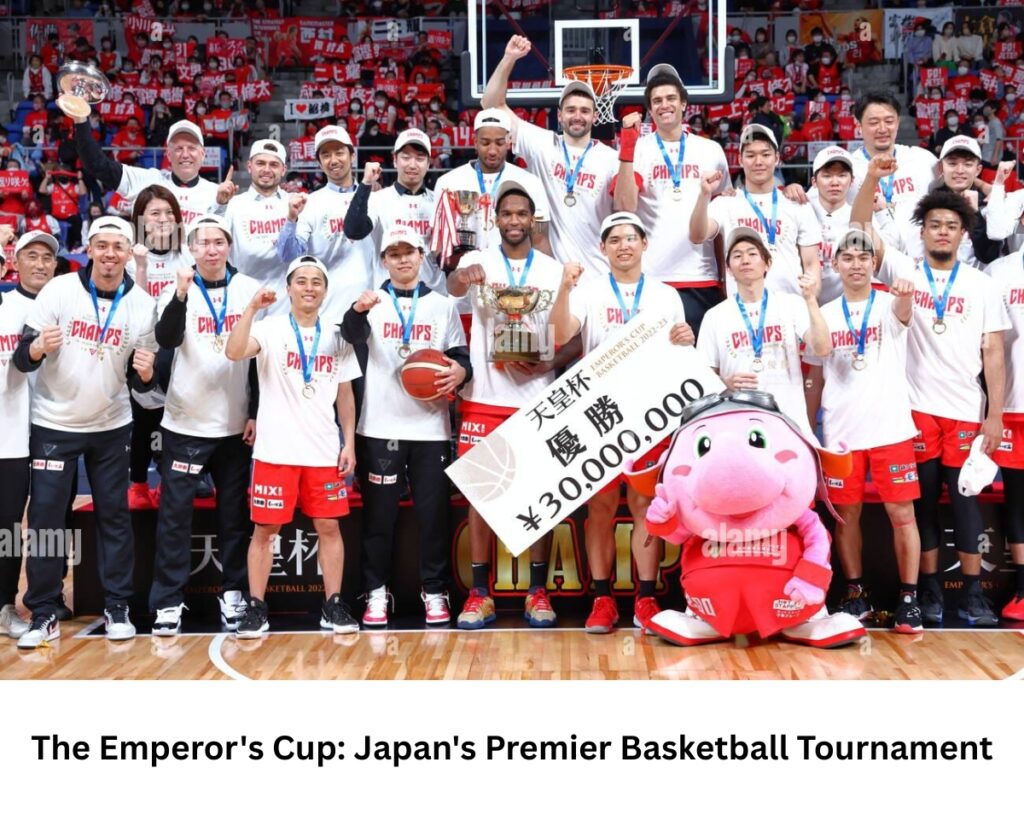
The Importance of the Emperor Cup.
The Emperor Cup is a special thing in Japanese basketball. It is among the most desired awards that a team can have. The history of the tournament provides it with a certain tradition and pride. The trophy itself, which is an Emperor’s gift, represents the ultimate in Japanese basketball success.
In the case of professional teams, it is an indicator of supremacy to win the cup. This shows that they are the most competent team in the country and not necessarily the league. It makes the club prestigious, players prestigious, and the fans prestigious. A cup run will also add momentum to the remainder of the B.League season. It gives tremendous morale and a reputation for the team.
In the case of university and amateur teams, participation is a massive opportunity. It enables them to compete with professional rivals. Players can be on the attention of professional scouts due to a good performance. To inflict an upset or a giant-killing is a national publicity and great pride to the team and to their community. These are events that form part of the tournament history. The cup is a platform for searching for new talent. It is what nurtures the ambitions of young players who wish to become professionals in the sport.
The Japanese community of basketball players is also brought together by the tournament. It unites the fans living in various parts of the world and representing various teams. The knockout system leads to the joint experience of suspense and drama. It creates national pride to the sport.
A Look at the 2025 Season
The 2025 Emperor Cup provided unbelievable basketball entertainment. It was a tournament full of matches and unexpected outcomes. Since the initial stages of qualifying all the way to the final game, the teams struggled to claim the coveted prize.
The number of teams participating in the tournament was 88. These involved the representatives of all 47 prefectures, the best university teams, and also clubs of B1 and B2. The first rounds depicted the talent of basketball in Japan. The champions of the prefects were hearty players, with some stripping off gorgeous surprises against superior players.
The B.League giants started to take over as the tournament went on. Battles were witnessed in the second and third rounds. B1 division teams came into action, and this increased the intensity of competition considerably. Popular and champion athletes were challenged by ambitious competitors. The single-elimination style also implied that not even a single day off for the strongest teams would be possible.
The semifinals and the quarterfinals were a presentation of the best of Japanese basketball. The last four teams were very skillful and tactical. Both matches were tight, with both sides alternating the lead several times. Players rose to the occasion in critical situations and gave memorable performances under pressure. The way to the end was a test of stamina and perseverance for the other teams.
Key Highlights and Memorable Moments
The Emperor 2025 Cup was rife with good memories. Among the largest stories was a team from Toyo University. Since they were the national champions as the representatives of the university, they had high expectations of the tournament. They did not disappoint. Toyo University made it to the finals by winning various professional teams on its way. Their hard-working performance and unscared spirit won the hearts of viewers. Their exploit was the ideal fable of the cup giant-killing.
The next unique point was an outstanding quarter-final between two B1 opponents. The match entered into the second overtime. Baskets were exchanged both ways between the two teams in an exciting offensive display. Within the last quarter, the lead changed more than a dozen times. The game was won on a last-second three-pointer, which took the victorious team to the semifinals in a dramatic manner. Already, this game is being referred to as one of the greatest in recent tournament history.
It was a well-deserved conclusion to a good season. It pitted a long-time powerhouse against an emerging challenger. The air in the arena was dynamic. It was a strategic struggle in the very beginning. Each team had an oppressive defense. The margin was narrow all through. Ultimately, it came through the experience of the powerhouse team. They played the perfect game during the last few minutes to come out with a very difficult win and win the Emperor Cup trophy.
The Future of the Emperor Cup.
The Emperor Cup is not an ordinary tournament, and it is the heartbeat of Japanese basketball. It brings the professional leagues and the lowly of the sport together. It gives a platform on which university heroes achieve national myth, and where established professionals have to demonstrate their greatness. The knockout nature of the tournament will ensure there is drama, thus each basket and every possession will count. This brings about a culture of anything can occur.
In the future, the Emperor’s Cup is going to remain an important aspect of the sphere of sport. It is an effective growth driver. It demonstrates to them that there is a way to the top regardless of their starting point. This is what makes the sport lively and competitive on every level due to this promise of opportunity. The cup will be a national pride and indeed a celebration of the game.