Static Stretches, Cold Knees and the Ten Minutes UK Volleyball Keeps Wasting
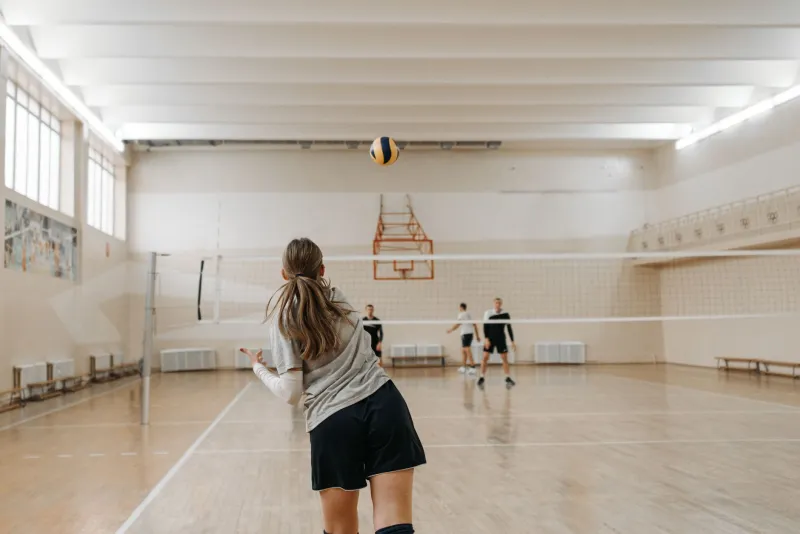
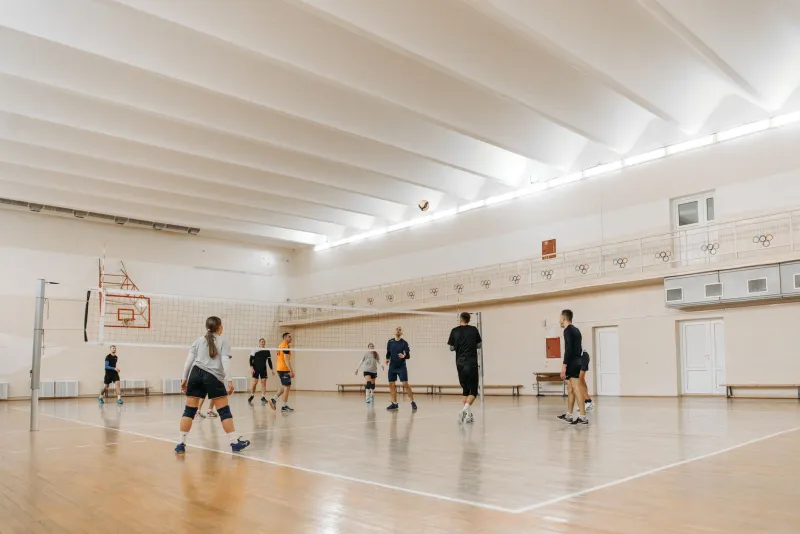
By mid-November, the UK volleyball season has settled into its familiar rhythm: dark car parks, squeaky sports-hall floors, and a race against the clock before the first serve. And in that race, the warm-up is usually the first thing to get cut.
You know the scene. Players drift in from the cold, dump bags by the wall, half-heartedly stretch a quad, take a few serves, and then wonder why the first set feels like running through treacle. At grassroots level, this isn’t laziness. It’s habit. Most clubs are run by volunteers, captains and coaches who are already juggling court bookings, team sheets and a kettle that takes twelve minutes to boil. The warm-up becomes the bit nobody owns.
But those ten minutes before a match or training session are some of the most valuable in the whole week. Not because they guarantee a win, but because they set the tone for how bodies move, how teams communicate and how quickly players switch on. In a cold school hall in November, they also matter for injury prevention.
The cold-hall problem
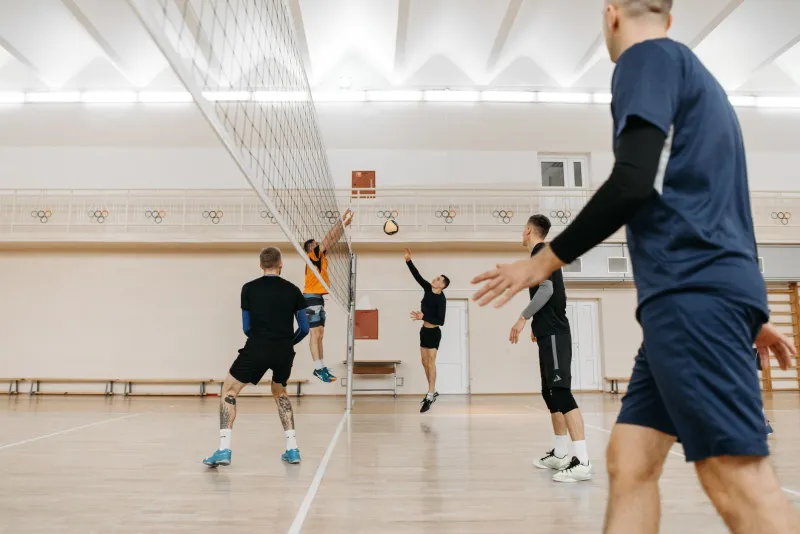
Volleyball is a stop-start, explosive sport played in a lot of spaces that were not designed for it. One minute you’re standing still behind the service line; the next you’re pushing off for a block, landing from a spike or diving for a ball that was never really yours. That requires muscles and joints to be ready to react, not just loosely stretched.
A lot of UK clubs still default to static stretching because it looks like a warm-up. Toe touches, long quad holds, a token shoulder stretch. It’s familiar, it fills time and nobody has to explain it. The issue is that holding a stretch for thirty seconds while your body is still cold from the walk across the car park doesn’t do much to prepare you for the movement patterns you’re about to repeat.
It also eats time. By the time players have stretched every leg muscle they can name, the first ball has been served and nobody has actually raised their heart rate, activated their hips or practised a landing.
None of this is about wrapping players in cotton wool. It’s about being smarter with the minutes clubs already have. A proper dynamic warm-up doesn’t need a sports scientist, a gym or a set of fancy equipment. It needs a captain who will start it on time and a routine simple enough that nobody argues about it.
What a proper hall warm-up actually looks like
The best grassroots warm-ups follow a simple arc: raise, mobilise, activate, then ramp up to volleyball-specific movement. Think of it as a ramp rather than a checklist. You want players gradually moving from “standing around in a coat” to “ready to compete”.
A workable ten-to-twelve-minute sequence for a school hall or leisure centre might look like this:
- Raise — two to three minutes. Jogging, side steps, shuffles, backward jogging, a few changes of direction. No volleyballs yet. The aim is warmth and a bit of controlled breathing, not a fitness test.
- Mobilise — three minutes. Leg swings front-to-back and side-to-side, hip circles, ankle rocks, thoracic rotations, arm circles. Keep it moving. A few controlled repetitions per movement, not a yoga class.
- Activate — three minutes. Glute bridges, split squats, band walks if the club has bands, scapular retractions and wall slides. This is the part that often gets skipped, and it’s the part that helps shoulders and hips feel switched on for hitting and blocking.
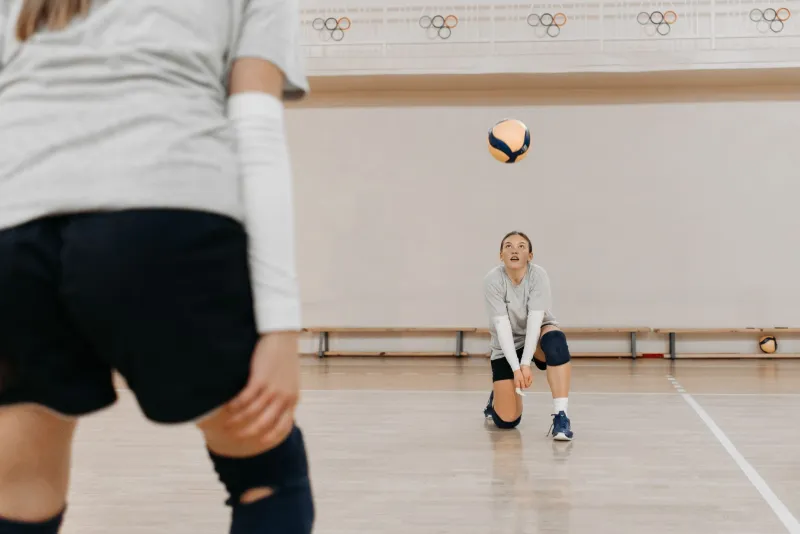
- Potentiate — two to three minutes. Short approach jumps, block footwork, a few light pepper rallies, serving to a partner. This is where the warm-up starts to look like volleyball.
That’s it. No equipment beyond a few balls and, ideally, a set of resistance bands that can live in the team kit bag. The whole thing can be led by a captain or team manager from the middle of the court. Put one player in charge of the raise, another for mobilise, and let the coach take the volleyball-specific finish.
The captain’s script
One reason warm-ups fail is that they are vague. “Do a warm-up” is not a instruction. A captain-friendly script is.
Try this: “Two laps of the hall, then side steps and shuffles. Meet in the middle. Leg swings, hip circles, ankle rocks. Then bridges and split squats. Grab a ball, pepper for two minutes, then we serve.”
It’s not glamorous, but it works. It also gives newer players a clear picture of what “ready” looks like. At clubs with mixed experience levels — a common feature of grassroots volleyball — that clarity is worth its weight in gold.
Winter is not the enemy, but cold bodies are
There’s a temptation in UK volleyball to treat winter as something to survive. Halls are colder, floors can be slick, and players arrive with shoulders hunched against the rain. That makes the first few minutes even more important. A dynamic warm-up won’t stop every injury, but it gives players a better chance of landing well, moving with control and reacting to the ball instead of reaching for it.
It also helps with the less glamorous stuff: the older player with stiff hips, the student who has been sitting in lectures all day, the parent who has driven forty minutes to make the match. A proper warm-up is a leveller. It says everyone gets the same preparation, not just the ones who arrived early.
Make it the culture, not the exception
The clubs that do this well don’t treat the warm-up as a pre-match formality. They treat it as part of the session. It starts on time. It has a leader. It finishes with a ball. Nobody stands around waiting for someone else to take charge.
That’s the real fix. Not a complicated programme, but a shared habit. In a cold hall on a Tuesday night, ten minutes of purposeful movement can be the difference between a team that starts on the front foot and one that spends the first set warming up.
The first whistle is coming. The least clubs can do is be ready before it.