The Other Team Sheet: Why Junior Volleyball Leagues Run on Parent Power
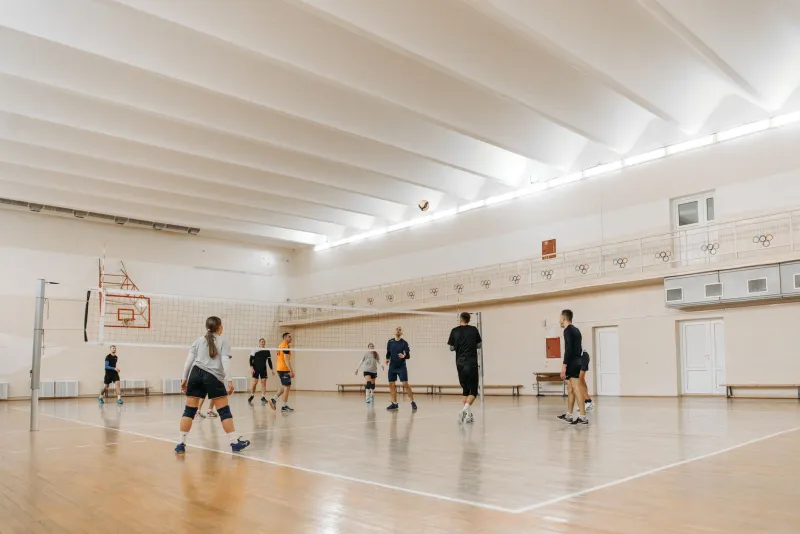
Sunday morning, 8.40am, somewhere off a ring road in the Midlands. The sports hall doors are still locked, the car park is half full, and a parent is already standing by the boot of their car handing out squash bottles like a pit crew. Another is balancing a cardboard tray of teas, a clipboard and a first-aid kit. A third is trying to remember which player belongs to which parent, and whether the under-16s are in the right kit or the wrong one.
This is the other team sheet. Not the one pinned to the wall with starting sixes and rotations, but the one that gets everyone to the hall, keeps the score table staffed, and makes sure there is something warm to drink when the second match goes to a tie-break.
Junior volleyball in the UK does not run on goodwill alone. It runs on systems — and the parent network is one of the most important systems a club has.
More Than a Lift Home
Ask a junior club what it needs most and you will usually hear the same list: more court time, more coaches, more referees, more players. All true. But scratch the surface of any thriving junior section and you will find a group of parents doing jobs that never appear in a match report.
They are driving three players across two counties for a 9am start. They are learning the scoring app on the way in because the regular table official has a family commitment. They are washing kit, topping up club funds, running the WhatsApp group, and standing at the end of the court pretending not to be nervous when their child serves for the set.
None of that is glamorous. All of it is necessary. A club with twenty eager juniors and no transport rota is a club that will struggle by November. A club with a brilliant coach and no one willing to run the score table is a club that cannot host fixtures.
The parent pipeline is not a nice-to-have. It is infrastructure.
The Rota Is a System, Not a Favour
There is a difference between asking the same five parents to help again and building a rota that people can actually use. The first creates resentment. The second creates a club.
Strong junior sections tend to make helping specific, time-bound and shared. Instead of a vague call for volunteers, they break matchday into small jobs: one parent to drive to the away fixture, one to run the score table for the first match, one to cover refreshments, one to be the named first-aider if the club has trained someone. The jobs are written down, rotated, and handed over properly.
That matters because most parents are not refusing to help. They are worried about committing to something they do not understand. A scoring shift sounds terrifying until someone sits with you for twenty minutes and explains the sheet. A lift rota feels manageable when it is one away trip per half-term, not every Sunday until Easter.
Clubs that spell it out — simple guides, a matchday buddy, a named contact — get more yeses and fewer last-minute dropouts.
Burnout in the Stands
Volunteer burnout is not just a coaching problem. It shows up on the balcony. The parent who does every away drive, every scoring shift and every cake sale is often the person who quietly stops coming in February.
Warning signs are easy to miss: the same names on every sign-up sheet, the same person answering every message, the same car outside every venue. By the time a club notices, that parent may already be running on empty.
Retention starts with boundaries. Ask people what they can do, not what they should do. Keep shifts short. Share the admin. Say thank you in a way that is specific — not just a group message, but a nod to the person who spent Saturday afternoon washing pinnies. And make it normal for parents to step back for a month without the whole junior section falling over.
A club that protects its volunteers will keep them longer than a club that simply thanks them louder.
Building the Parent Pipeline
Player pathways get plenty of attention, and rightly so. But the parent pathway deserves a plan too. New families arrive at junior training knowing nobody. They may never have watched a volleyball match, let alone run a score table. If the first experience is a cold hall and a clipboard shoved into their hands, they will not rush back.
A better approach is a gentle onboarding. A welcome message before the first session. A named parent contact for each age group. A short guide to matchday — where to park, what to bring, how the scoring works, who to ask. A matchday buddy system that pairs a new parent with someone who has done it before. And a clear invitation to help that comes with options: travel, refreshments, scoring, socials, kit, fundraising.
Clubs that do this well often find that parents become referees, coaches, committee members and team managers. The pipeline is not just about filling a rota for this season. It is about building the people who will keep the junior section going for the next five.
The Flask Principle
There is a reason the flask keeps turning up in conversations about junior volleyball. It is not really about tea. It is about the small comforts that make a cold winter tournament feel like a club rather than a fixture. A hot drink, a spare hoodie, a parent who knows where the nearest shop is, a lift home when the match overruns.
Those details build loyalty. They tell families that the club sees them as part of the team, not just as transport and admin. And in a sport where junior sections often live or die on whether the same families come back next season, that matters more than any tactical tweak.
The players will get the headlines. The parents will get the car park. But if UK junior volleyball wants to keep growing, clubs need to treat that parent network as seriously as they treat the first six. Build the rota, share the load, protect the volunteers — and keep the flask filled.