The Long Haul: What Five-Set Nights Really Take Out of a UK Volleyball Club
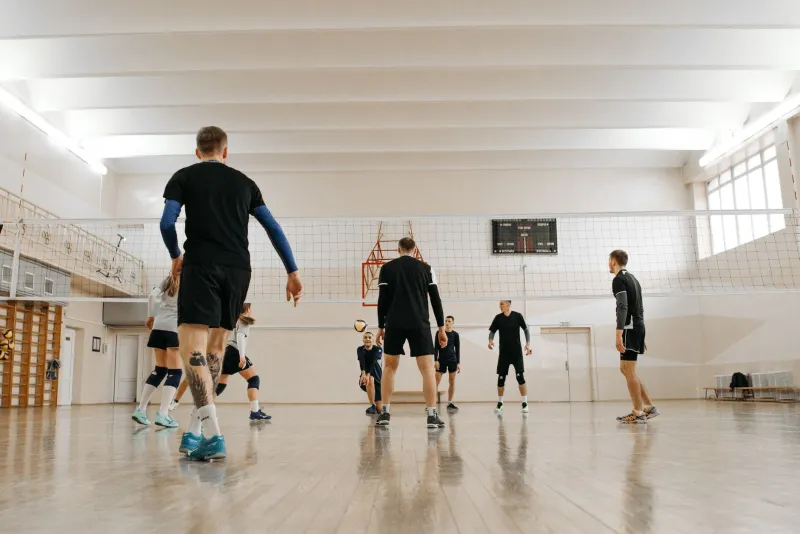
There is a particular sound a sports hall makes at about 10.15pm on a Tuesday. The nets are down, the posts are being wheeled away, and someone is doing the slow lap of the balcony looking for a water bottle they are fairly sure they brought in. If the match went to five, that sound arrives later, the caretaker is friendlier with the clock than with you, and half the team is already calculating whether the last train home is still a realistic concept.
Five-set volleyball is the best kind of chaos. It is also, quietly, one of the most expensive and demanding things a grassroots club does. Not always in cash — though often enough — but in time, goodwill, recovery and the small logistical decisions that decide whether a season feels like a joy or a slog.
The clock starts before the first serve
Ask any club treasurer and they will tell you the same thing: court hire is usually booked in blocks, and blocks have edges. A standard two-hour slot is fine for a three-set league match. Add a tight first set, a scrappy second and a fourth that refuses to die, and suddenly you are into the bit of the evening where the caretaker appears at the side of the court with the expression of someone who has already locked up twice.
“We had one home match last season where we went to five and the hall manager was brilliant about it, but you could feel the whole building waiting for us,” says Priya, a club secretary in the Midlands. “By the time we had done the handshakes and the team photo, we were 20 minutes over. That does not sound like much until you realise the next booking is a pilates class and the instructor is standing in reception.”
Overruns are rarely charged as a flat fee. Sometimes they are absorbed as goodwill. Sometimes they are paid in guilt and a promise to be quicker next time. And sometimes they are paid in cash, which is fine until it happens three weeks running and the club’s modest match-night budget starts to look a bit thin.
Travel plans are built for three sets
The away-day maths is even more delicate. A coach or a convoy of cars is arranged around a predicted finish time. If the match goes long, the driver who said they needed to be back for 9.30pm is now doing mental arithmetic at 9.45pm while the fifth set heads to 13-13. In some clubs, the post-match debrief happens in a car park. In others, it happens in a service station on the A14.
“We plan the return journey around a four-set match,” says Tom, a player-coach in the South East. “If it goes to five, that is an extra 25 minutes of volleyball and maybe 40 minutes of real life. You are not just asking people to play longer. You are asking them to reorganise childcare, lifts and the last bus.”
The practical takeaway is simple but often ignored: build a buffer into the away-day plan. Tell the driver the realistic worst-case finish time, not the hopeful one. If the club can afford it, have a designated fallback lift for the player who absolutely has to get back. And if you are the captain, do not wait until 14-14 in the fifth to ask who is on a tight turnaround. Ask before the first serve.
Recovery is not a luxury item
Five sets ask more of bodies than three. That is not exactly breaking news, but the recovery habits of grassroots clubs often lag behind the demands of the fixture list. A three-set match might mean a quick stretch and a chat in the car park. A five-set match means calves that feel like they have been through a mangle, shoulders that are quietly filing a complaint, and a brain that has spent two hours in a state of low-level alarm.
Smart clubs are starting to treat the long match differently. Nothing fancy — a proper cool-down, a bottle of water before the pub, a lift home rather than a sprint for the bus. Some teams have a simple rule: if the match goes to five, the post-match social starts 15 minutes later so people can actually stretch. Others have a designated “recovery buddy” who checks in the next day. It sounds small. It is not.
“We had a run of three five-setters in a month and you could see it in training,” says Hannah, a middle blocker in the North West. “Everyone was a bit flat, a bit stiff. We were not doing anything wrong, but we were not doing enough to reset either. Now we build a lighter session after a long one. The coach calls it a ‘legs and heads’ session — lots of movement, no heavy jumping, lots of talk.”
The bench gets longer, the decisions get harder
A five-set match is a coach’s puzzle box. Rotations tighten, match-ups matter more, and the difference between a good substitution and a costly one can be a single point. At grassroots level, where players often double up as coaches and the bench might be three people and a hopeful libero, the pressure is real.
One of the most useful things a club can do is rehearse the endgame before it happens. Not just the drills — the communication. Who calls the timeout? Who takes the team talk? What is the one thing we want to be true at 12-12 in the fifth? Teams that have talked through those moments tend to look calmer when they arrive. Teams that have not tend to look like a group chat that has just been told the wifi is down.
It also helps to know your personnel. If your setter has been running the offence for two hours and the fifth set is turning into a war of attrition, a fresh pair of legs on the wing might be worth more than a tactical tweak. If your youngest player is bouncing on the sideline, that energy is not a novelty — it is a resource. The trick is deciding before the tie-break, not during it.
The atmosphere is the point
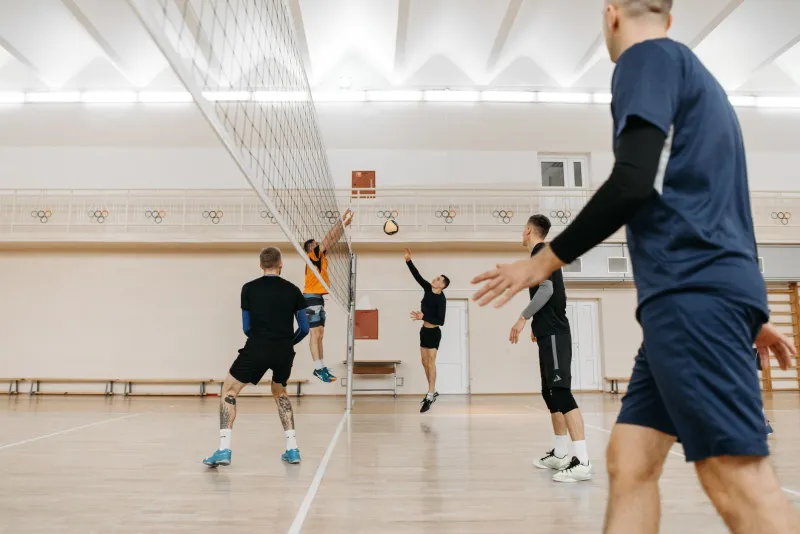
For all the costs, there is a reason people stay. A five-set match in a local sports hall can generate a noise level that feels entirely out of proportion to the number of people in the room. The parents who came to watch, the teammates who stayed after their own game, the random student who wandered in for a badminton session and got hooked — they all lean in a bit further when the fifth set starts.
That atmosphere is not an accident. It is built by clubs who make the long night feel worth it: a decent warm-up playlist, a half-time snack table that does not look like a resignation letter, and a culture where the people on the bench are as involved as the people on the court. It is also built by the simple act of thanking the caretaker, the scorer and the person who drove the minibus.
Five-set nights are not a problem to be solved. They are the bit of the season you remember. But they are also a reminder that grassroots volleyball runs on more than passion. It runs on court-hire extensions, sensible travel plans, recovery habits and a bench that knows what to do when the score hits 14-14.
So as the winter fixtures tighten and the nights get longer, the clubs that cope best will not necessarily be the fittest or the most talented. They will be the ones who have looked at the fifth set and thought: right, what does this actually ask of us? Then they will have answered it before the first serve, not after the last one.