The 50-50 Illusion: Why UK Volleyball's Coin Toss Decides Less Than You Think

The coin goes up, the hall goes quiet for half a second, and every captain in the country has an opinion. Serve first. Take the end with the better light. Pick the side you finished on last week. Or just call heads and hope the volleyball gods are paying attention.
But does winning the toss actually win UK volleyball matches? Across the 2026-27 league season, the honest answer is: not on its own. The toss is a small lever, not a magic wand. What matters far more is whether the captain winning it makes a clear, venue-aware decision — and whether the team then does the boring stuff well: serving in, passing with shape, defending the floor and siding out under pressure.
What the toss actually gives you
Under the indoor rules, the toss winner chooses either to serve or receive, or to take a particular side. The loser gets whatever is left. In a deciding set, there's another toss, and teams switch ends when the leading side reaches eight points.
That's it. No hidden points, no automatic momentum, no guarantee that the first serve will land in. Yet in club volleyball, the toss often gets treated like a tactical masterstroke. In reality, it's the first decision of the match — and like most first decisions, it's only as good as the information behind it.
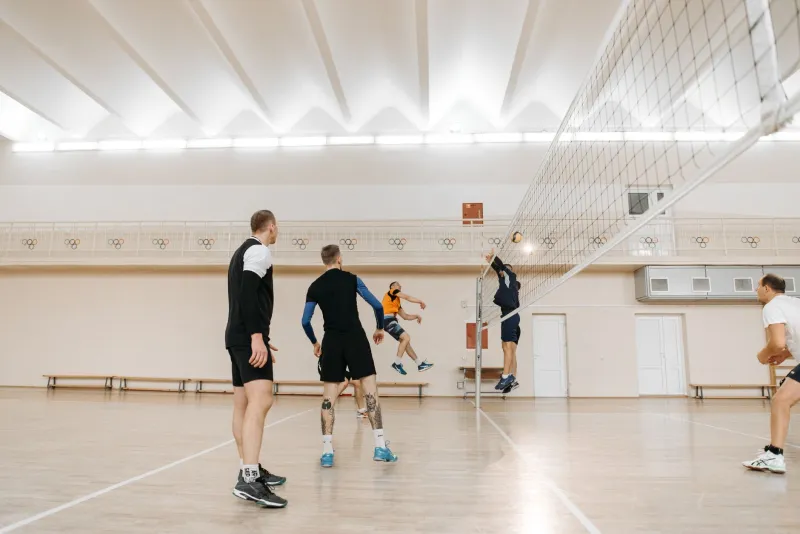
At grassroots level, the biggest factor is usually not the coin at all. It's the hall. UK sports halls are wonderfully varied: low ceilings, cricket nets, basketball markings, a scoreboard that glares at one end, windows that turn a simple serve into a solar eclipse, and benches that are either right behind the court or halfway to the car park. A captain who knows those quirks is already ahead.
What 2026-27 scorecards suggest
Volleyball Blaze has been speaking to clubs and looking at scorecards shared from league nights this season — not an official national dataset, just the kind of match records grassroots and Super League clubs keep for themselves. The pattern is pretty consistent: toss winners do not run away with matches. Opening sets swing on serve error rates, first-ball reception and unforced errors far more than on who served first.
In several tight matches, the team that lost the toss actually settled faster. Maybe that's because they had nothing to overthink. Maybe it's because the toss winner chose to serve, missed two of the first four, and spent the next ten minutes chasing the set. Small sample, sure, but the lesson is familiar: first serve is only an advantage if your server can consistently put the ball where the plan says.
Side selection is where the toss gets more interesting. In halls with a bad background or a bright end, choosing the better side can be worth more than choosing to serve. A clean sightline behind the ball helps passers pick up spin. A darker background helps servers see the seams. A bench near the court can lift a team; a bench tucked behind a curtain can make a close set feel oddly flat. These are marginal gains, but volleyball is a game of margins.
The psychological lift is real — but short
Winning the toss does give a captain a brief sense of control. It's the first moment where you can say 'we're doing this our way'. That can calm nerves and set a tone. But the lift evaporates quickly. If the first serve goes long, if the first pass shanks into the net, if the team starts bickering about who should have taken the end with the better light, the toss becomes an excuse rather than an edge.
Losing the toss can even be freeing. Some coaches quietly like it. No decision to second-guess, no immediate post-mortem if the first set goes badly. The team simply plays what's in front of it. That's not a reason to throw the toss, obviously. It's a reason not to treat it like a verdict.
What coaches actually choose
Ask ten UK captains what they do when they win the toss and you'll get a split. Plenty default to serve because it feels aggressive. Others choose the side with the better background or the end away from the low ceiling. A few experienced captains ask the referee a quiet question about the lighting, then pick accordingly.
The most switched-on clubs decide before the coin even leaves the referee's hand. They have a default — usually receive in lower leagues, where first-serve errors are common, or serve at a higher level if they have a reliable jump server who can apply pressure from point one. They also have a side preference ready for each venue. That way, the toss is not a moment of panic. It's a quick confirmation of a plan.
In a deciding set, the same logic applies. Don't automatically take the serve. Look at the ends. Which one has the cleaner background? Which one has your bench and your supporters? Which one have you just won from? If there's no clear difference, go with your default and get on with it. The switch at eight points means you'll be at the other end soon enough anyway.
A practical toss checklist for club captains
- Inspect both ends before warm-up. Lighting, background, ceiling height, run-off, scoreboard glare, bench position and anything else that could distract a passer.
- Name a decision-maker and a backup. The captain on the court should know the plan if the usual captain is late or subbed off.
- Have a default. For many grassroots teams, receiving first is the calmer choice. At a higher level, a strong serve can set the tone — but only if it's reliable.
- Use side selection when the hall is uneven. If one end has a dodgy background or a distracting window, take it. A clean sightline can be worth more than the first serve.
- In the deciding set, choose the end you want to finish on — or the one that helps you start. And remember the switch at eight.
- Keep it brief. The toss is not a team talk. Make the call, tell the referee, tell your team, then get back to the warm-up.
The Blaze verdict
The coin toss does not win UK volleyball matches. Serving in, passing with intent, defending with discipline and making good substitutions win matches. But the toss is still a decision worth taking seriously, because it costs nothing to get right and it sets the tone for how a captain thinks.
Winning the toss should not feel like a lottery ticket. Losing it should not feel like a setback. The best clubs in 2026-27 will treat it as exactly what it is: a small tactical choice, made quickly, based on the hall in front of them. Heads or tails, the real work starts on the first serve.