Booking Around the Blackout: Inside UK Volleyball’s December Court Scramble
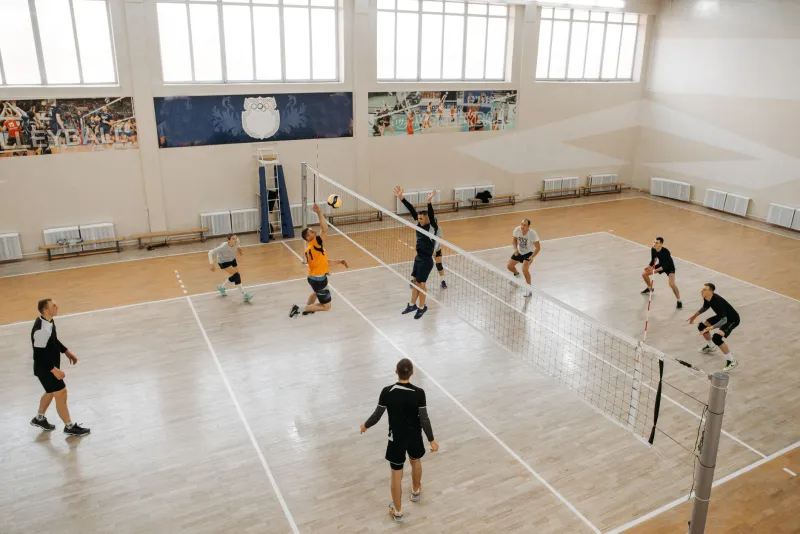
December is supposed to be the busy bit. Festive fixtures, cup ties, the last push before the Christmas break. Then the email lands: the school hall is closed from 18 December to 5 January, the leisure centre is running holiday camps, and the college sports centre is shut to external bookings. Just like that, your club has no court for three weeks — and the season hasn’t paused to notice.
This is the annual blackout, and it’s not a small admin annoyance. For plenty of grassroots clubs, December is the month when momentum goes missing. Training stops, players drift, and January arrives with a squad that has spent a fortnight on the sofa and a coach trying to work out why everyone’s calves are screaming after the first warm-up.
The gap nobody puts on the fixture list
UK volleyball leans heavily on shared spaces. School sports halls, community centres, council leisure centres, university courts — the same venues that host PE lessons, badminton clubs, five-a-side and the local dog training group. When schools break up and councils run holiday programmes, volleyball is often the first booking to go.
Some clubs lose one week. Others lose four. A few manage to keep one midweek slot but lose their weekend home matches, which means rearranging fixtures, begging opponents for a return leg and explaining to the league why your home court is suddenly 30 miles away.
The knock-on effect is rarely just logistical. Players who miss three sessions in a row start to feel detached. Newcomers who joined in October — the ones who were just getting comfortable — are the most likely to drift. And the first session back in January can feel like a pre-season trial rather than a continuation of the season.
The venue hunt: late slots, borrowed posts and the two-town shuffle
The clubs that handle December best tend to start ringing round in October. Not because they enjoy admin, but because the good alternative courts go early.
Leisure centres are the obvious fallback, though availability is patchy. You might get a 9pm slot on a Tuesday, or a Sunday morning shared with a junior badminton session. College and university sports centres can work if they stay open to community bookings over the holidays, but access, parking and key collection can turn into a saga. Church halls and community centres sometimes have the space — and occasionally the ceiling height — but you need to check flooring, post sockets and whether the caretaker will actually be on site.
The practical checklist is longer than most clubs expect: ceiling clearance, floor surface, post stability, net height, court markings, changing rooms, insurance cover, risk assessment, first aid, and whether the venue will let you store equipment between sessions. A cheap hall with a low ceiling and no post sockets is not a bargain. It’s a wasted booking.
Some clubs also buddy up. If your neighbours have a court and you don’t, a shared session can keep both squads ticking over. It’s not ideal for match preparation, but it beats three weeks of nothing — and it keeps the social side alive.
Off-court doesn’t mean off the boil
The savvy response to a courtless December is not to write the month off. It’s to change the training block.
With no volleyball floor, clubs are running strength and conditioning sessions in local gyms, school fitness suites or even a hired studio. The focus is simple: maintain a base, protect joints, keep players connected. That means bodyweight circuits, resistance-band work, landing mechanics, ankle and calf strength, shoulder prehab, and a bit of low-level conditioning that doesn’t leave everyone wrecked.
It is not about smashing everyone into the ground before Christmas. It’s about giving the tendons and muscles a reason to stay switched on. Volleyball is a jumping, landing, changing-direction sport, and a sudden return to two-hour sessions after a month off is exactly how ankles and knees get hurt.
Video review is another easy win. A classroom session, a clubroom, even a pub back room with a laptop and a whiteboard can do more for a team’s tactical awareness than another aimless hitting drill. Players can watch their own serve-receive shape, talk through rotation decisions and spot the patterns they miss when the ball is live.
And then there’s the social side. A December social isn’t a replacement for training, but it keeps the squad together. In a month when the court disappears, the club that still feels like a club is the one that comes back stronger.
The January handbrake
The real cost of the shutdown shows up in the first two weeks of January. Players come back stiff, coaches come back optimistic, and the session plan often looks exactly the same as it did in November. That’s the trap.
A month of reduced load followed by a sudden spike is a classic recipe for soft-tissue niggles, ankle rolls and shoulder soreness. The clubs that manage it well treat the first week back as a ramp-up, not a second pre-season. Lower volume, more warm-up, gradual reintroduction of jumping, and a bit of honesty about how much mince pie has been consumed.
The goal is to avoid the January handbrake: that moment halfway through the first match back when everyone realises their legs have forgotten what a five-set rally feels like. A few off-court sessions in December won’t make everyone bulletproof, but they can take the edge off the return.
Plan it like an away day
The clubs that cope best with the blackout treat it like any other fixture: confirm dates early, share the plan, check the details. Book the alternative venue before the school term ends. Confirm keys, access times and insurance. Tell players the plan in November, not on the day the hall closes. Collect subs, sort lifts and make the off-court sessions feel like part of the season rather than a punishment.
December doesn’t have to be a dead month. It can be a different one. The clubs that plan around the shutdown don’t just survive it — they come back in January with a squad that still knows each other, still moves together, and hasn’t spent three weeks wondering whether anyone remembered to book a court.
That’s the real win. Not a perfect December, but a January that doesn’t start from scratch.