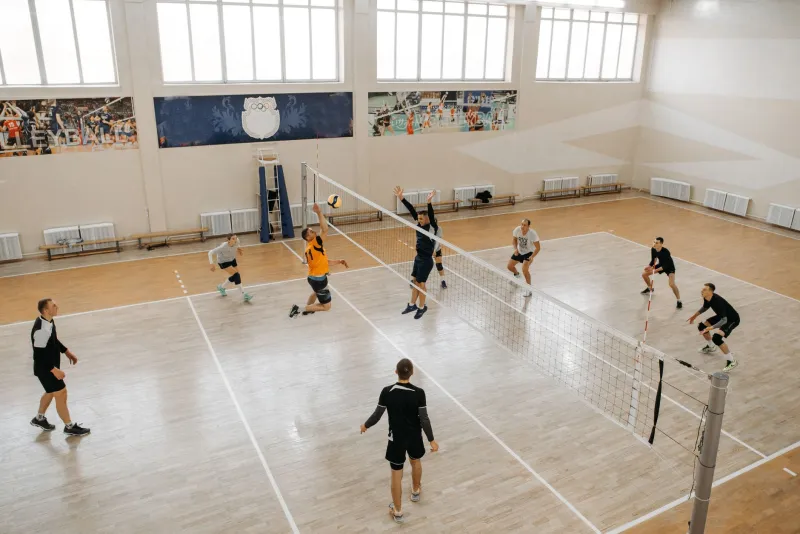
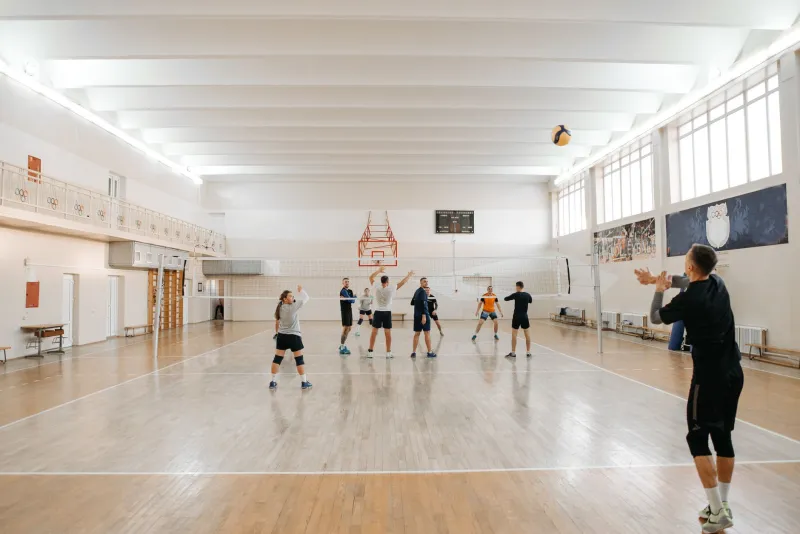
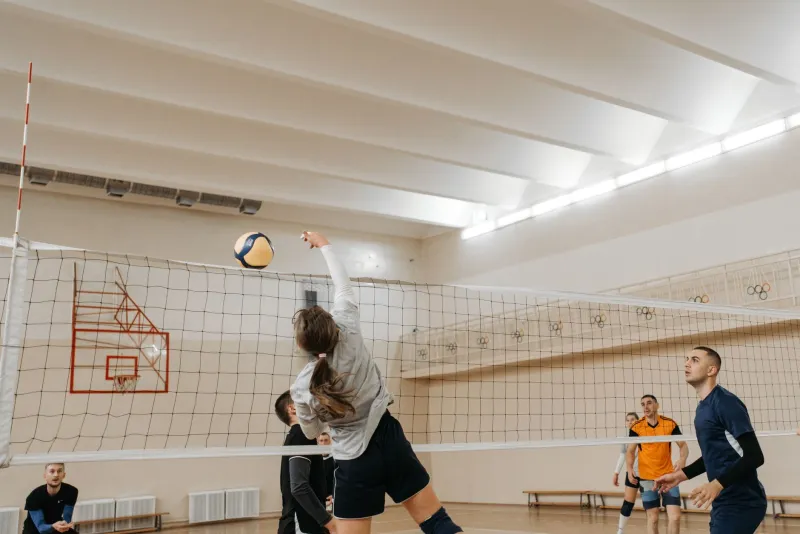
The School Hall Revolution: Volleyball's Biggest Talent Pipeline Is Sitting Empty
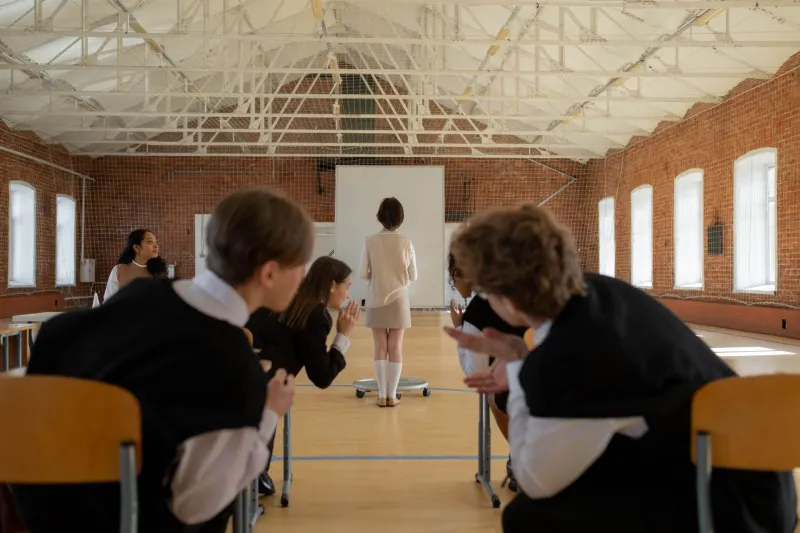
Every volleyball club in Britain has the same complaint. There are not enough players, not enough coaches and not enough halls. We say it at committee meetings, in WhatsApp groups, in the car park after training. And yet, a ten-minute walk from most of those clubs, there is a secondary school sports hall with a net gathering dust in a cupboard and a PE teacher who would love some help.
That is the gap this sport needs to close in 2026. Not another social media campaign. Not another one-off tournament. A proper, boring, unglamorous push into schools.
The Case Is Embarrassingly Obvious
Volleyball has a participation problem at the top of the funnel. Most players in the UK find the sport in their twenties — at university, at a club taster session, or through a colleague who drags them along to a Tuesday night rec session. By then, we have lost a decade of development.
Compare that with basketball or netball, where school PE does the heavy lifting and clubs simply skim the best off the top. Volleyball's equivalent pipeline barely exists in most counties. A Year 8 student who discovers the sport at thirteen could be a decent regional-level player by sixteen and a junior coach by eighteen. Instead, most of them never touch a ball outside a two-week rotation in PE.
This is not a talent argument. It is a numbers argument. The more schools that play, the more clubs that survive, the more coaches who get paid, the more halls that stay open. Everyone downstream benefits.
Three Barriers Worth Naming
Kit. A decent net system and a set of balls costs money that PE departments rarely have spare. Cheap portable nets sag, posts wobble, and nothing kills enthusiasm faster than a net you have to re-tie after every point. A simple grant application can cover a basic setup, but somebody has to volunteer to write it.
Coaching. Many PE teachers will happily teach volleyball if they feel confident doing so. The problem is that volleyball coaching is genuinely technical, and a two-hour CPD session does not turn a hockey specialist into a setter whisperer. Clubs have that knowledge and almost never share it in a structured way.
Court time. Schools are under exam pressure, timetable pressure and facility-hire pressure. A sports hall that could host an after-school session is often booked for revision or hired out to generate income. The competition for space is real and it will not be won by complaining.
Where It Is Already Working
It is happening, just quietly. A junior club in Leicestershire has an arrangement with two secondary schools where a club coach runs a Wednesday after-school session in exchange for match-day use of the hall. A North East club sends two volunteers into local schools for a six-week block every autumn and gets a steady trickle of Year 9s into its junior training group each January. A Midlands college runs a leadership course that turns sixth-formers into qualified helpers, who then support primary school festivals.
None of these are glamorous. All of them are repeatable. The common thread is a named person at the club, a named person at the school, and a written agreement about who does what — usually one side of A4, sometimes less.
What a Good Partnership Actually Looks Like
Forget the grand strategy document. Start with a single term and three promises.
- A member of staff on the ground. One club coach, DBS-checked, available weekly for six weeks. Consistency matters more than brilliance.
- Equipment sorted. Bring the balls, bring a portable net if the school has none, leave a set behind if you can afford it.
- A clear exit route. Every school session should have a flyer with the club's junior training times on it. If there is no pathway, the enthusiasm evaporates by half term.
On the school side, the asks are modest: a slot in the hall, a WhatsApp contact, and permission to put a poster up. Teachers are not being difficult when they hesitate. They are protecting a timetable that is under enormous strain, and they will respond far better to a specific offer than a vague suggestion of support.
The Counter-Arguments, Briefly
Some clubs will say they have no spare coaches. Fair — but a coach who gives up one evening a week for six weeks often gets three new junior members out of it, and juniors bring parents, and parents bring volunteers. Some will say the school should come to them. That is not a strategy, it is a stalemate. Others will say the standard is not there. It never is at the start. That is rather the point.
There is also a legitimate concern about safeguarding and workload. Both are manageable with the right paperwork and the right people. Neither is a reason to do nothing.
What to Do This Season
Identify five secondary schools within a fifteen-minute drive of your training venue. Find out who runs PE. Send one short, specific email in the next fortnight offering a six-week block, with dates and a named coach. Do not wait for a national campaign to tell you it is a good idea.
The school hall is the biggest untapped resource in British volleyball, and it is not locked. It just needs somebody to knock. If UK volleyball wants a stronger pipeline in 2026 and beyond, that knock has to come from clubs — and it has to come now, before the January timetable fills up.