Blaze Night: The Rec Social Formula That Turns a Quiet Tuesday Into Club Gold
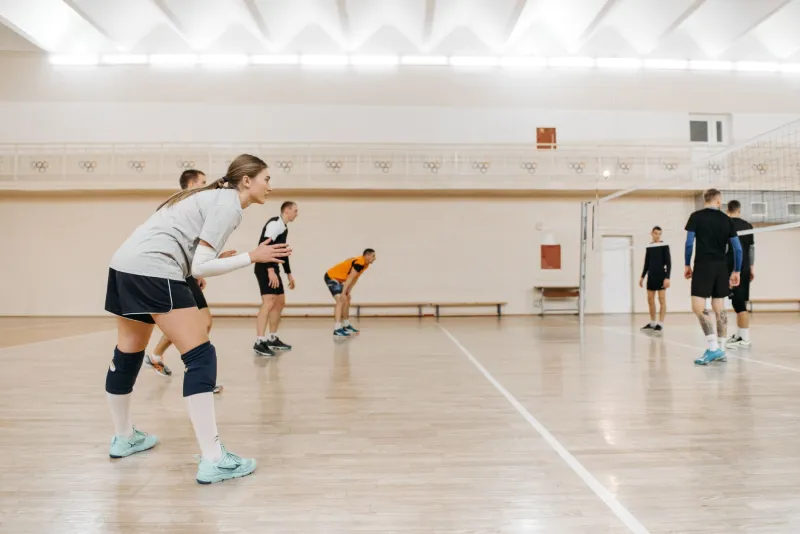
Every volleyball club talks about growing membership. Fewer clubs talk about how they actually do it. The answer is rarely a shiny new website or a viral video. More often, it is a regular social session that feels welcoming, runs on time, and gives beginners a reason to come back next week.
Call it a Blaze Night. It is not just open gym. It is not a league fixture in disguise. It is a deliberately designed social volleyball session that sits alongside your competitive teams and feeds club culture.
What a Blaze Night is — and what it is not
A Blaze Night is a 90- to 120-minute session for mixed abilities, with a coached warm-up, a short skills bite, and plenty of game time. It should feel friendly, not frantic. The aim is simple: everyone touches the ball, everyone plays, and nobody spends 20 minutes stood in a queue.
It is not a free-for-all. Open gym can be brilliant, but it can also turn into the same six players dominating one court while newcomers hover near the water fountain. A Blaze Night has a format. That format is what makes beginners feel safe and regulars feel challenged.
The runnable format
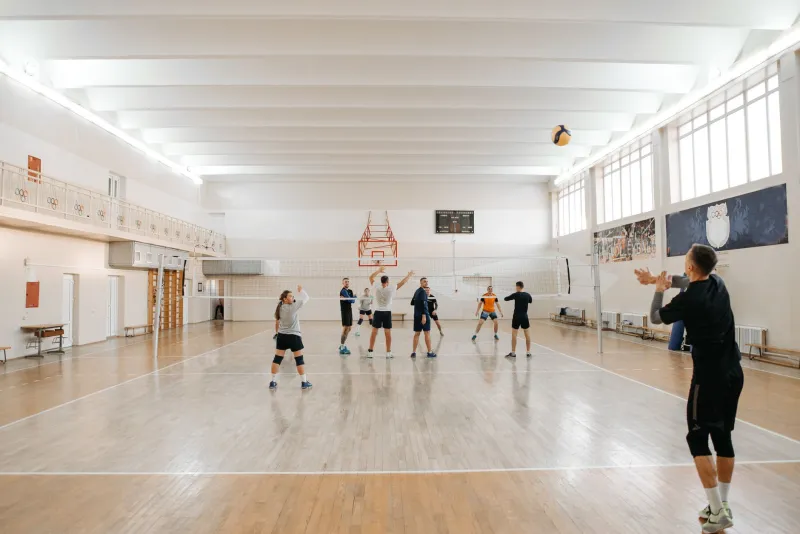
Here is a template that works in a standard school or leisure centre hall.
18:45 — Doors open. Welcome desk, name stickers, sign-in sheet. If you can, have one club member stationed there whose only job is to chat to new people.
19:00 — Warm-up game. Something light and volleyball-shaped: throw-and-catch volley tennis, three-touch cooperative rallying, or a movement game. No line drills yet.
19:15 — Skills bite. Ten minutes on one theme. Serving is a good opener because it is easy to scale. Passing is another. Keep it short and let people practise immediately.
19:30 — Mixed teams. Split into teams of four or six, mixing abilities. Run short games — 12 minutes or first to 15 — then rotate. Use bibs, a visible scoreboard, and a whistle so transitions are quick.
20:30 — Blaze Ladder. A king/queen of the court finish. Winners stay on, challengers rotate in. It is competitive enough for regulars and simple enough for beginners.
20:50 — Cool-down and social. Announce next week's theme, thank people, and head to the pub or cafe if you can. The social bit after the session is where the club culture actually sticks.
Low-cost promotion that works
You do not need a marketing budget. You need consistency and a few local touchpoints.
- One Instagram Reel per week. Film a rally, a funny miss, a beginner's first serve. Put the session time and a QR code in the caption.
- Member referrals. First session free for anyone brought by an existing member. Give the member a small perk — a free session, a club sticker, a shout-out.
- Local university societies. Freshers and international students are often looking for a non-trials environment. Send them a simple poster and an offer of a free taster.
- Sports centre noticeboard. A cheap poster with a QR code still works. Put it where people queue for courts.
- WhatsApp and Facebook community groups. Local sports groups, running clubs, netball clubs and workplace channels are all fair game.
- Google Business Profile. Make sure your club shows up when someone searches for volleyball in your town.
Venue, insurance and the boring bits
This is the part that separates a fun idea from a sustainable session.
Check your venue hire agreement. Does it cover public liability? What is the hall capacity? Are you allowed to play music? Can you store equipment? What time do you actually get access?
Make sure your club has the right insurance. Volleyball England affiliation comes with insurance benefits, but you need to understand what is covered and what is not. If you are using coaches or volunteers, check safeguarding requirements, DBS checks where appropriate, and first-aid arrangements. Write a simple risk assessment. Have an emergency action plan. It takes an hour and saves a lot of headaches.
Price it simply. A fiver on the door, first session free, and a loyalty card that gives every sixth session free. That is enough to cover hall hire and equipment without making beginners feel like they are signing up to a gym contract.
Build the culture, not just the session
A Blaze Night works because it gives people a role. Regulars can help set up the net. Experienced players can mentor a beginner for one rotation. Someone can run the playlist. Someone else can take photos, with consent. Give the night a name, a vibe and a bit of ritual — player of the night, a beginner graduation shout-out, a monthly social afterwards.
Clubs across the UK are already proving the model. University-city clubs in Leeds, Cambridge, Newcastle and Durham use beginner-friendly sessions as a feeder into league squads. Community clubs in London and Southampton use social volleyball to keep ex-players connected and to bring in local people who have never played before. The common thread is not elite coaching. It is consistency and welcome.
The bottom line
A league team needs points. A club needs people. A weekly Blaze Night can do both: it can find your next player, keep your current members smiling, and make your club the one people recommend when a friend says they fancy trying volleyball.
Light the touchpaper. Put a date in the diary, book the hall, and run it. Then run it again next week.