Ready to turn your backyard into the ultimate splash zone? The Blue and Yellow Log Roller in the Pool is the best way to bring big smiles and high energy to your next swim. It is more than a simple toy; it is a fun challenge that tests your balance while you laugh with friends.
You do not need to be an expert to enjoy the thrill of trying to stay on top while the log spins in the water. Every fall is just part of the fun! This gear makes every pool day feel like a special event that nobody wants to miss.
Table of Contents
What Is a Blue and Yellow Log Roller?
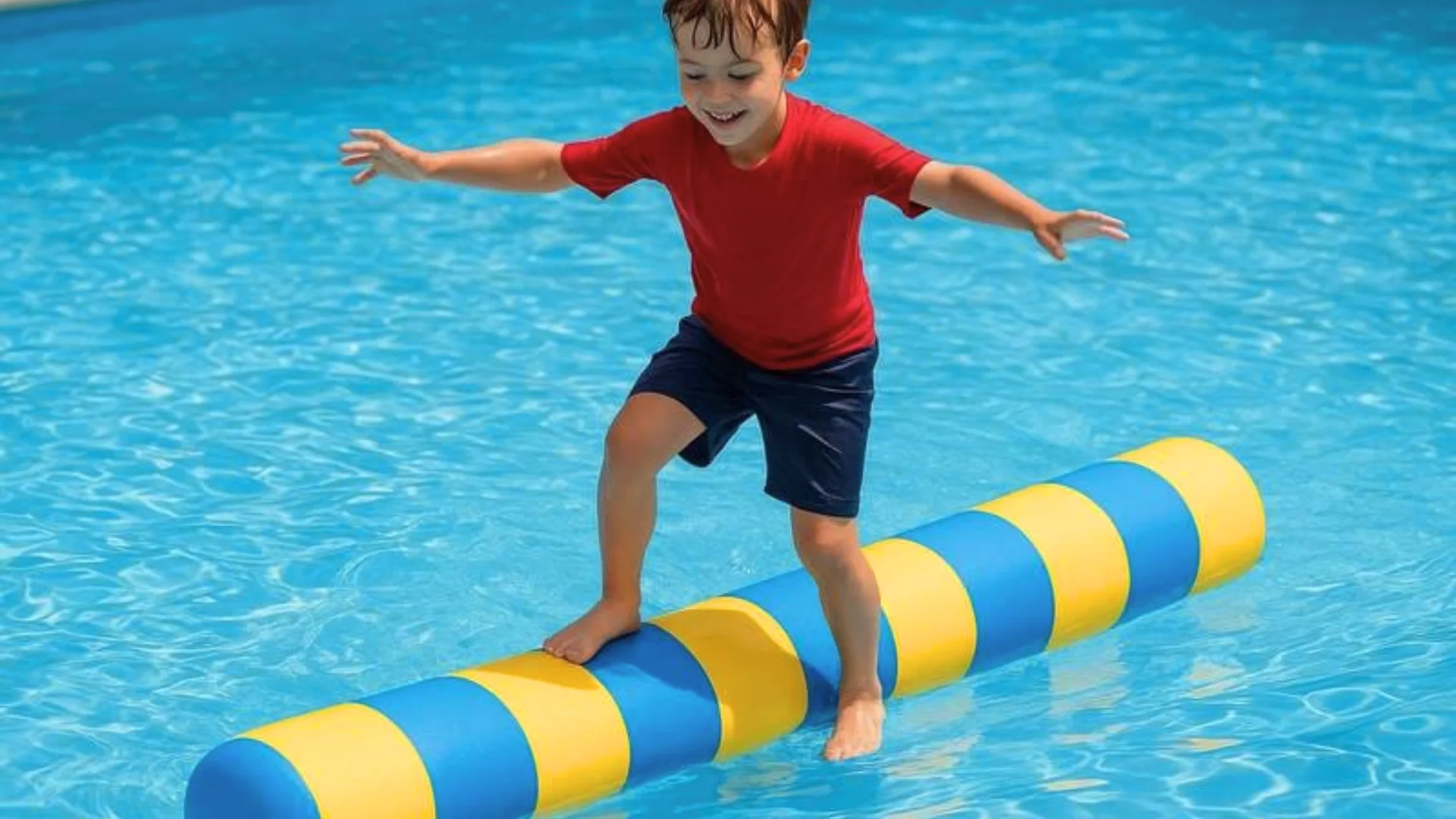
A blue and yellow log roller is a long, cylindrical inflatable rolling log designed to float in the pool while users stand on top and try to stay balanced. As soon as you start moving your feet, the log spins under you, and the challenge is simple: stay upright longer than everyone else.
You will see these rollers in home pools, summer camps, resorts, waterparks, and aquatic centres because they instantly create a “who wants to try?” style challenge. The bright blue and yellow colours make the toy easy to see in the water and also give the whole pool a playful, party‑ready look.
From River Birling to Pool Toys: A Short History
Log rolling goes back to the late 1800s, when lumberjacks in North America had to balance on floating logs while guiding timber downriver. Over time, that survival skill turned into a competitive sport called birling, where contestants stood on a spinning log and tried to knock each other off with pure footwork and balance.
Traditional log rolling used heavy cedar logs and spiked shoes, which are obviously not safe or practical in a backyard swimming pool. In the 2000s, the Hoeschler family helped bring the sport to modern audiences with the Key Log, a synthetic, water‑fillable training log designed for pools and lakes.
From there, companies like Aflex developed inflatable rolling logs in bright blue and yellow vinyl to offer a lighter, more affordable, and more accessible option for casual pool play.
Design Deep Dive: How the Blue and Yellow Log Roller Is Built
The blue and yellow log roller might look simple at first glance, but there is a lot of smart design hidden inside it. From the materials used to its size, shape, and colours, every detail plays a role in how it floats, spins, and survives heavy use in the pool.
Materials and Construction
Most commercial‑style log rollers are made from heavy‑duty PVC or coated fabric, with heat‑welded seams built to handle repeated climbing, falling, and impact. They are “sealed” inflatables, which means you inflate them once with a pump and then use them directly in the pool without needing a continuous blower.
Because they live in harsh conditions, these toys are typically UV‑resistant and chlorine‑resistant, so sunlight and treated pool water do not destroy them too quickly. Product lines like Aflex’s sealed toys are specifically designed for busy facilities where equipment is used heavily day after day.
Size, Shape, and Colour
For home use, a blue and yellow log roller is often around 1.5 metres (about 60 inches) long, which suits typical backyard pools. (You can keep this consistent with your initial size data.) Commercial logs like the Aflex Rolling Log are about 3 metres (9’11”) long and include anchor points for secure placement in larger pools.
The shape is a simple cylinder but with a “fat log” profile: wide enough to float well yet easy to spin under a rider’s feet. Bright blue and yellow (sometimes with red accents) are not just for looks; they are high‑visibility colours that make it easier for lifeguards and supervisors to monitor activity from a distance.
Stability and Difficulty
A roller’s diameter, internal mass, and how it interacts with the water all influence how fast it spins. Wider‑body logs feel a bit more stable for beginners, while narrower or lighter designs spin faster and create a tougher challenge. Single‑rider play is more controlled; when two people get on opposite ends, the log often spins more aggressively, which doubles the chaos and the fun.
Safety First: Using a Blue and Yellow Log Roller in the Pool
As fun and chaotic as log rolling can be, it only stays enjoyable when you set it up safely. A few basic rules about water depth, spacing, supervision, and equipment care make a huge difference in keeping everyone laughing instead of getting hurt.
Pool Setup and Environment
For safe falls, your pool should have at least around 0.9 metres (3 feet) of water where you set up the log. Place the roller in the centre of the pool, well away from walls, ladders, drains, slides, and any other hard surfaces that someone could hit when they fall. The fall zone should be clear of other swimmers, toys, and floats so nobody accidentally lands on someone else.
Supervision, Age, and Skill
Most organizations recommend log rolling for teens and adults (13+), especially those who are confident swimmers. Non‑strong swimmers should only participate while wearing a properly fitted life jacket and with very close adult supervision. Keep to one or two users at a time, and always follow the manufacturer’s maximum weight capacity and usage guidelines.
Remember that the blue and yellow log roller in the pool is a recreational toy, not a flotation device or safety tool, so it should never be treated as life‑saving equipment.
Maintenance and Storage
Before each session, check the seams, valves, and overall firmness so you do not put anyone on a partially deflated or damaged log. After use, rinse it with fresh water to remove chlorine or salt residue, then let it dry completely before folding and storing it. For maximum lifespan, keep it in a cool, shaded, dry place, as both UV light and heat can gradually weaken vinyl.
How to Use It: Beginner’s Guide to Log Rolling
For home use, you can inflate the log with an electric or manual pump; sealed pool toys usually inflate quickly and hold air for extended sessions.
Commercial‑grade logs like the Aflex Rolling Log can be clipped to lane ropes or dedicated fittings using built‑in anchor points so they stay centred in the pool. Before anyone climbs on, run through a quick checklist: correct water depth, clear fall zone, a supervisor watching, and the roller fully inflated.
Basic Technique: Stand, Balance, and “Fast Feet”
The easiest way for beginners to mount the log is from the water: approach the side, slide your chest on, then move to your knees, and finally stand up. Keep your knees slightly bent, arms out for balance, and your eyes looking forward instead of down at your feet.
As soon as the log starts to move, you need “fast feet,” small, quick steps that match or counter the direction of the spin to keep you centred. Common beginner mistakes include locking the knees, staring at the water, or pushing the opponent instead of focusing on footwork, all of which usually end in a fast splash.
Fun Game Ideas: Turn Your Pool into a Log‑Rolling Arena
Once everyone understands the basics, the real magic of the log roller comes from the games you play on it. With just one inflatable log, you can create multiple game modes that work for families, friend groups, camps, and even organized events.
1v1 “Last One Standing” Duel
The classic game mode is a one‑on‑one duel: two players stand on opposite ends of the log, someone counts down, and the first person to fall loses the round. You can run best‑of‑three or best‑of‑five series so everyone gets multiple chances to improve their timing and tactics.
To make it even more entertaining, add fun consequences: the loser performs a silly dive, does a short victory dance for the winner, or has to pose for a dramatic slow‑motion fail photo. This simple format works for kids, teens, and adults and quickly becomes the main event at pool parties.
Time Trial: “Can You Beat 30 Seconds?”
For a solo challenge, have one player at a time climb onto the log while someone runs a stopwatch; the goal is to stay upright as long as possible. You can set a benchmark like “30 seconds” or keep a leaderboard with the best times labelled as “Pool Log Champion of the Day.”
Camps and resorts can turn this into a daily or weekly challenge, encouraging guests to come back, try again, and beat their own records.
Trick Round and Style Points
Once people get comfortable just staying on, you can introduce trick rounds where players attempt specific moves such as a 180‑degree turn, sitting down and standing back up, or changing direction mid‑spin. A couple of friends can act as judges and score each attempt from 1 to 10 based on control, creativity, and splash factor.
These kinds of rounds are perfect for social media; the blue and yellow log roller in the pool can easily become your go‑to prop for Reels and TikToks full of epic saves and hilarious wipeouts.
Team Relay: Great for Camps and Groups
In a team relay, each team member must stay on the log for a minimum number of seconds (e.g., 10 or 15) before jumping off and tagging the next teammate. The first team to have all members complete their turns without breaking the rules wins.
This format is ideal for summer camps, school programs, and corporate events because it combines teamwork, cheering, and just the right amount of friendly pressure.
Hidden Workout: Fitness Benefits of Log Rolling
One of the best things about the blue and yellow log roller in the pool is that it gives you a serious workout without ever feeling like a boring exercise session. While you are laughing and trying not to fall, your body is quietly working on strength, balance, and coordination.
Core Strength and Balance
Aquatic fitness programs like log rolling because it forces your core, hips, legs, and stabilizer muscles to work constantly to keep you upright. Those continuous micro‑adjustments improve your balance, which can carry over into everyday movement, better posture, and a lower risk of falls.
Low‑Impact, High‑Energy Cardio
Short, intense attempts on the log, followed by rest while you swim back and climb up again, naturally create an interval‑style workout. Since you land in water instead of on a hard surface, the activity is much easier on your joints than many land‑based balance drills, making it relatively friendly for knees and lower backs.
Coordination, Reaction Time, and Fast Footwork
Staying upright on a spinning log demands quick decisions, precise foot placement, and good timing. That combination sharpens coordination and reaction time and works as excellent cross‑training for sports like football, basketball, volleyball, skiing, and martial arts, where agile footwork is crucial.
Buying Guides for the Right Blue and Yellow Log Roller in the Pool
Not every log roller is built for the same type of pool or user, so choosing the right one matters. A quick look at who will use it, how often, and in what kind of setting will help you decide between a simple home model and a heavier‑duty commercial option.
For Home Pool Owners
If you are buying for a backyard pool, start by checking that the log’s length fits comfortably within your pool dimensions, leaving plenty of clear water around it. Very long commercial logs can feel cramped in small pools, so a medium‑length residential model is usually the better choice.
Look at material thickness (PVC gauge), seam quality, and maximum weight capacity on the product page before you buy. Also consider how easy it is to inflate and deflate, whether it uses standard valves that fit your existing pump, and whether a repair kit and basic warranty are included.
For Camps, Schools, and Resorts
Camps, swim schools, and resorts should lean towards commercial‑grade options like the Aflex Rolling Log, which are built for frequent, heavy use. At around 3 metres long with anchor points, these rollers integrate perfectly into structured programs, open‑play sessions, and special events.
For institutional buyers, vendor support also matters: look for advice on installation, access to spare parts, and repair services. Since these devices can become signature attractions, it is worth investing in equipment that can handle crowds and still perform reliably.
Price, Warranty, and Rules Check
Prices vary widely depending on size, material quality, and whether the product is aimed at residential or commercial use. Many manufacturers offer warranties covering defects in materials or seams for a certain time, so reading the fine print before purchase is always smart.
If you are buying a blue and yellow log roller in the pool for a public or semi‑public facility, take time to check local safety codes and insurance requirements, especially around supervision, water depth, and how far the device must be kept from walls and other structures.
FAQs About Blue and Yellow Log Rollers
Q1: Is a blue and yellow log roller in the pool suitable for small backyard pools?
It can be, as long as the roller’s length leaves enough clear water at both ends so riders do not fall near walls, steps, or ladders; shorter residential models are better for small pools.
Q2: Is it safe for non‑swimmers?
Non‑swimmers or weak swimmers should only participate while wearing a proper life jacket and under very close adult supervision, and even then the activity should stay in a controlled, shallow area.
Q3: How long can I leave the log inflated?
Sealed inflatables are designed to stay inflated for extended periods, but many manufacturers recommend partially deflating or storing the toy if it will sit unused in strong sun for long stretches.
Q4: Can the same model be used by kids and adults?
Most commercial‑grade rollers are built for a wide age and weight range, as long as users stay within the stated weight limit and follow safety guidelines, though very young children may feel more comfortable on smaller inflatables.
Q5: What is the difference between a Key Log and an inflatable log roller?
A Key Log is a synthetic, water‑fillable training log designed for serious log‑rolling practice and competition, while an inflatable blue and yellow log roller in the pool is a lighter vinyl toy aimed mainly at recreation, parties, and casual fitness.