The Bench That Bites Back: Inside UK Volleyball’s Second-Team Surge
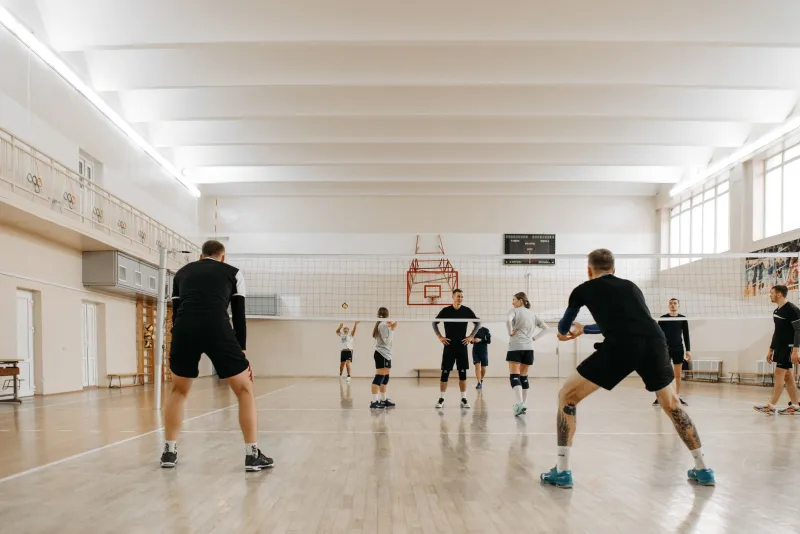
Walk into a busy UK sports hall on a Tuesday night and you can usually tell the health of a volleyball club before a ball is even served. Is there a second court humming? Are there players warming up who are not in the first six? Is someone organising the B team’s fixtures while the first team talks tactics? If the answer is yes, you are probably looking at a club that has worked out something important: the second six is not spare parts. It is the engine room.
Across the 2026-27 season, second teams, development squads and social sides are moving from afterthought to strategy. The reason is simple. Clubs that only build for the first team tend to leak players. Clubs that build a genuine ladder — beginners’ sessions, social volleyball, a second team, then the first team — tend to keep them.
Why the second six matters now
Adult volleyball in the UK has a familiar dropout pattern. Players love the social side, then hit a wall: they are not quite ready for the first team, but the beginner course has finished and there is nowhere obvious to go. A second team fills that gap. It gives players regular fixtures, a defined role and a reason to keep turning up in January when the nights are grim and the hall hire invoice lands.
It also protects the first team. A strong B side means the first team can call on match-fit players instead of asking someone to step up cold from a training session. And it changes the mood in the club. When the second team has its own fixtures, its own mini-league table and its own slightly chaotic post-match debrief, the club feels bigger than one squad.
Three clubs, three models
One Leicestershire club has made its second team a genuine local-league side rather than a rolling friendly XI. The B team trains on the same night as the first team, shares the warm-up, then splits for game-based work. The club pays one hall bill, one coaching structure and two league entries. The result is a squad of around a dozen players who know their fixtures in advance and a first team that has a reliable bench.
A Bristol side took a different route. Its second six is explicitly a bridge from beginner courses into competitive volleyball. Players commit to a block of training, play a mix of friendlies and local league matches, and are reviewed at Christmas. The club is honest: not everyone will reach the first team, but everyone gets matches. That honesty has made recruitment easier, not harder.
A Yorkshire club uses a social side as the front door. The social six plays monthly, enters the odd triangular tournament and feeds players into the second team when they are ready. It is less formal, but it keeps people in the building. And in grassroots volleyball, keeping people in the building is half the battle.
The fixture question
A second team without fixtures is just a training group with a nice badge. Clubs need to decide early what the B team is for: local league competition, development friendlies, tournament weekends or a mix. Local league entry is usually the backbone. Friendlies fill the gaps. Triangular tournaments are brilliant for giving everyone court time without asking one club to host a full match night every week.
The trap is treating the second team as a fixture filler for the first team. If the B team only plays when the first team has a gap, players stop trusting the schedule. Publish the calendar early. Protect the dates. Let the second team have its own rhythm.
Coaching without splitting the first team
You do not need a full-time coach for every squad, but you do need a plan. Some clubs use a player-coach from the first team. Others share a lead coach across both groups and use senior players to run the B team’s game-based blocks. Video review helps: one phone, one tripod and ten minutes of clips can do more than an extra hour of unguided drills.
The key is that the second team is not left to drift. Give someone responsibility for the session plan, the fixture admin and the player check-ins. It does not have to be the same person. It does have to be someone.
Kit, costs and the awkward bits
Second teams cost money. Hall hire, league fees, affiliation, kit and travel all add up. The smartest clubs budget for the B team from the start rather than hoping it pays for itself. Shared kit orders keep costs down. Sponsorship can be easier to find when you can show a club with two teams, not one. And a simple player contribution model — monthly subs or match fees — works better than a surprise invoice in February.
Selection policy needs to be written down. Who gets called up to the first team? How does a B team player get feedback? What happens when the first team needs a substitute at short notice? Transparent answers stop the second six feeling like a demotion.
A practical checklist for a genuine second six
- Define the purpose: local league, development friendlies, social volleyball or a blend.
- Budget for hall hire, league entry, affiliation, kit and travel before the season starts.
- Publish a fixture calendar early and protect those dates.
- Appoint a lead coach or coordinator, even if it is a shared role.
- Write a simple selection and call-up policy.
- Set a kit plan that does not require players to buy everything at once.
- Agree how costs are shared and how sponsorships are used.
- Check safeguarding, first aid and venue requirements for every fixture.
- Review at Christmas: numbers, minutes played, retention and feedback.
The first-team pathway
The best second teams are not reserve teams in the old-fashioned sense. They are development teams with a direct line to the first team. Training together helps. Shared warm-ups help. Honest feedback helps most of all. Players need to know what they are working towards, whether that is a first-team debut, more consistent serving or simply enjoying competitive volleyball for the first time.
A second six will not fix every club problem. It will not pay for itself overnight and it will not turn a beginner into a Super League player in one season. But it will give players a place to belong, matches to play and a reason to stay. In 2026-27, that is not a luxury. It is the smartest move in club volleyball.